Welcome Message
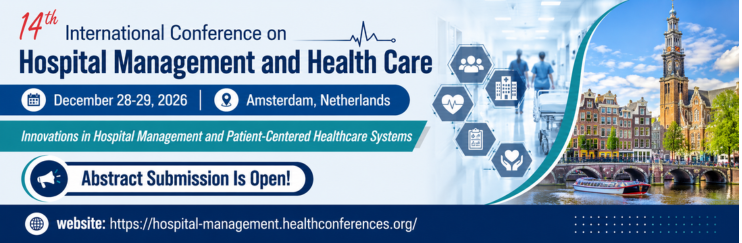
Welcome to the 14th International Conference on Hospital Management and Health Care, taking place on December 28-29, 2026, in Amsterdam, Netherlands.
It is our great honor and privilege to extend a warm welcome to all distinguished delegates, healthcare professionals, researchers, academicians, policymakers, hospital administrators, and industry experts joining us from across the globe. Your presence reflects a shared commitment to advancing healthcare systems and improving the quality, accessibility, and sustainability of patient care worldwide.
This year’s conference, centered on the theme “Innovations in Hospital Management and Patient-Centered Healthcare Systems,” aims to address the critical challenges and emerging opportunities in modern healthcare delivery. As healthcare systems continue to evolve in response to technological advancements, demographic changes, and global health demands, the need for innovative, efficient, and patient-focused management strategies has never been more important.
Throughout the two-day program, participants will have the opportunity to engage in a diverse range of activities, including:
-
Inspiring keynote addresses by globally recognized experts
-
Technical sessions highlighting cutting-edge research and case studies
-
Panel discussions focusing on policy, leadership, and healthcare transformation
-
Workshops and interactive forums designed to encourage collaboration and practical learning
-
Networking sessions fostering partnerships between academia, healthcare institutions, and industry
Key topics of discussion will include digital transformation in healthcare, hospital administration and leadership, healthcare quality improvement, patient safety, health informatics, telemedicine, value-based care, and strategies for enhancing patient engagement and satisfaction.
This conference also serves as a dynamic platform for the exchange of ideas, enabling participants to present their research, share best practices, and explore innovative solutions that can shape the future of hospital management and healthcare delivery systems globally.
We are especially delighted to host this event in the timeless city of Amsterdam, a place rich in history, culture, and innovation. We encourage you to take this opportunity not only to engage in academic and professional enrichment but also to experience the unique heritage and hospitality that the city has to offer.
We extend our sincere gratitude to our organizing committee, speakers, sponsors, and partners for their invaluable contributions in making this conference possible. Your dedication and support are instrumental in creating a meaningful and impactful experience for all attendees.
We hope that your participation in this conference will be intellectually stimulating, professionally rewarding, and personally memorable. May it inspire new ideas, collaborations, and lasting connections that contribute to the advancement of healthcare systems worldwide.
Welcome once again, and we wish you a successful and enriching conference experience.
About Healthcare Management 2026
Healthcare Management 2026, held in conjunction with the 14th International Conference on Hospital Management and Health Care, is a premier global forum dedicated to exploring the latest advancements, challenges, and innovations in healthcare systems and hospital administration.
This conference brings together a diverse group of participants, including healthcare professionals, hospital administrators, policymakers, researchers, academicians, and industry leaders. It serves as a platform for sharing knowledge, discussing emerging trends, and fostering collaborations aimed at improving healthcare delivery and management practices worldwide.
With the central theme, “Innovations in Hospital Management and Patient-Centered Healthcare Systems,” Healthcare Management 2026 focuses on the transformation of healthcare organizations through technology, leadership, and strategic planning. The conference emphasizes the importance of creating efficient, sustainable, and patient-focused healthcare systems that can adapt to the evolving global health landscape.
The scientific program covers a wide range of topics, including hospital administration, healthcare quality and patient safety, digital health and health informatics, telemedicine, healthcare policy and economics, leadership and organizational behavior, and innovative models of care delivery. Special attention is given to the integration of advanced technologies such as artificial intelligence, data analytics, and electronic health systems in improving healthcare outcomes.
Healthcare Management 2026 offers a comprehensive agenda featuring keynote speeches, oral and poster presentations, panel discussions, and interactive workshops. These sessions are designed to encourage active participation, knowledge exchange, and practical learning among attendees.
Why Attend Healthcare Management 2026?
Attending Healthcare Management 2026 offers a unique opportunity to gain valuable insights, expand your professional network, and stay at the forefront of advancements in hospital management and healthcare systems. Here are some key reasons to participate:
1. Learn from Global Experts
Gain knowledge from internationally renowned speakers, industry leaders, and healthcare professionals who will share their expertise, research findings, and real-world experiences.
2. Explore Latest Innovations
Discover cutting-edge developments in hospital management, digital health, telemedicine, health informatics, and patient-centered care strategies shaping the future of healthcare.
3. Enhance Professional Skills
Participate in workshops, panel discussions, and technical sessions designed to strengthen your leadership, decision-making, and management capabilities.
4. Networking Opportunities
Connect with peers, researchers, policymakers, and industry experts from around the world, fostering collaborations and long-term professional relationships.
5. Present Your Research
Showcase your work through oral or poster presentations, receive constructive feedback, and gain recognition within the global healthcare community.
6. Stay Updated on Industry Trends
Understand current challenges, emerging trends, and future directions in healthcare systems, hospital administration, and policy development.
7. Gain Practical Insights
Learn about real-world case studies, best practices, and innovative solutions that can be implemented in your own organization.
8. Experience a Global Platform
Be part of an international forum that promotes knowledge exchange, innovation, and excellence in healthcare management.
9. Cultural and Professional Experience
Enjoy the opportunity to visit Amsterdam, Netherlands, while engaging in a meaningful academic and professional event.
Attending Healthcare Management 2026 will not only enhance your knowledge and skills but also empower you to contribute effectively to the advancement of healthcare systems and patient care worldwide.
Target Audience
Healthcare Professionals
Hospital Administrators and Managers
Researchers and Academicians
Policy Makers and Government Officials
Healthcare Consultants and Advisors
Public Health Professionals
Health IT and Digital Health Experts
Pharmaceutical and Medical Device Professionals
Non-Governmental Organizations (NGOs)
Students and Early Career Professionals
Clinical Researchers
Healthcare Entrepreneurs
Health Insurance Professionals
Quality and Patient Safety Specialists
Medical Directors
Nursing Leaders and Administrators
Health Economists
Biomedical Engineers
Telemedicine Specialists
Healthcare Educators and Trainers
Hospital Operations Professionals
Healthcare Data Analysts
Scientific Sessions and Track
Session 01: Digital Transformation in Hospital Management
This session focuses on the integration of digital technologies in hospital management to improve efficiency, accuracy, and patient outcomes. It explores how healthcare institutions are adopting advanced tools such as electronic health records (EHRs), artificial intelligence (AI), data analytics, and cloud-based systems to streamline operations and enhance decision-making. The session also addresses challenges related to implementation, data security, and system interoperability.
Key Focus Points:
-
Adoption of Electronic Health Records (EHRs)
-
Role of Artificial Intelligence in healthcare management
-
Big data and predictive analytics in hospitals
-
Digital tools for patient engagement and care coordination
-
Cybersecurity and data privacy in healthcare systems
-
Interoperability and integration of healthcare systems
-
Telehealth and remote patient monitoring technologies
-
Challenges and best practices in digital transformation
Session 02: Patient-Centered Care and Quality Improvement
This session emphasizes strategies for enhancing patient-centered care and improving overall healthcare quality. It highlights approaches to design services that prioritize patient needs, safety, and satisfaction, while also addressing the measurement and improvement of clinical outcomes. Participants will explore best practices, frameworks, and innovative tools that support continuous quality improvement in hospitals and healthcare organizations.
Key Focus Points:
-
Principles of patient-centered care
-
Strategies for improving patient satisfaction and engagement
-
Quality improvement frameworks and methodologies
-
Patient safety initiatives and risk management
-
Measuring and monitoring clinical outcomes
-
Implementing feedback systems for continuous improvement
-
Best practices in hospital service delivery and care coordination
-
Role of leadership in fostering a culture of quality
Session 03: Healthcare Policy, Regulation, and Governance
This session explores the role of healthcare policy, regulatory frameworks, and governance structures in shaping effective and sustainable healthcare systems. It examines how policies impact hospital management, patient care, resource allocation, and compliance with national and international standards. Participants will discuss strategies to navigate regulatory challenges, implement governance best practices, and ensure accountability and transparency in healthcare organizations.
Key Focus Points:
-
Overview of healthcare policies and regulations
-
Hospital governance and leadership models
-
Compliance with national and international healthcare standards
-
Resource allocation and financial management in hospitals
-
Risk management and accountability mechanisms
-
Policy-driven strategies for improving healthcare delivery
-
Ethical considerations in hospital administration
-
Collaboration between policymakers, administrators, and healthcare providers
Session 04: Innovations in Health Technology and Telemedicine
This session focuses on the latest innovations in health technology, digital tools, and telemedicine that are transforming healthcare delivery. It highlights how hospitals and healthcare providers are leveraging technology to enhance patient care, expand access, and optimize operational efficiency. The session also addresses the integration of telehealth services, wearable devices, mobile health applications, and other digital solutions into modern healthcare systems.
Key Focus Points:
-
Emerging health technologies and digital tools
-
Implementation of telemedicine and remote care services
-
Mobile health applications and wearable devices
-
Enhancing patient access and engagement through technology
-
Data-driven decision-making in healthcare
-
Integration of technology with existing hospital workflows
-
Challenges and solutions in adopting new healthcare technologies
-
Future trends in digital health and telehealth innovations
Session 05: Leadership and Strategic Management in Healthcare
This session addresses the critical role of leadership and strategic management in driving hospital performance and improving healthcare outcomes. It focuses on developing effective leadership skills, organizational strategies, and decision-making frameworks that enable healthcare institutions to adapt to changing environments, optimize resources, and deliver high-quality patient care.
Key Focus Points:
-
Leadership styles and their impact on hospital performance
-
Strategic planning and organizational development
-
Decision-making and problem-solving in healthcare management
-
Change management and fostering innovation in hospitals
-
Team building and workforce motivation
-
Performance measurement and continuous improvement
-
Crisis management and resilience in healthcare organizations
-
Best practices in leadership for patient-centered care
Session 06: Healthcare Finance and Resource Management
This session explores effective financial management and resource allocation strategies in hospitals and healthcare organizations. It emphasizes the importance of budgeting, cost control, and financial planning to ensure sustainable operations while maintaining high standards of patient care. Participants will gain insights into optimizing resources, improving efficiency, and aligning financial strategies with organizational goals.
Key Focus Points:
-
Budgeting and financial planning in healthcare
-
Cost control and operational efficiency
-
Revenue cycle management and financial performance
-
Resource allocation and optimization
-
Financial decision-making and risk management
-
Investment in healthcare infrastructure and technology
-
Aligning financial strategy with patient-centered care
-
Monitoring and evaluating financial outcomes
Session 07: Healthcare Data Analytics and Artificial Intelligence
Focuses on the use of data analytics and artificial intelligence (AI) in healthcare to improve decision-making, operational efficiency, and patient outcomes. The session examines how hospitals and healthcare organizations can leverage big data, predictive analytics, and AI-driven tools for clinical, administrative, and strategic purposes.
Key Focus Points:
-
Big data analytics in healthcare
-
Predictive modeling for patient outcomes
-
AI applications in diagnostics and treatment planning
-
Data-driven decision-making in hospital management
-
Integration of AI with electronic health records
-
Improving operational efficiency through analytics
-
Challenges and ethical considerations in healthcare AI
-
Future trends in healthcare analytics and AI innovation
Session 08: Patient Safety and Risk Management
Focuses on strategies and best practices to enhance patient safety and manage risks within healthcare organizations. The session highlights methods to identify, assess, and mitigate clinical and operational risks while promoting a culture of safety and accountability.
Key Focus Points:
-
Patient safety frameworks and standards
-
Risk assessment and management strategies
-
Clinical incident reporting and analysis
-
Implementing safety protocols and procedures
-
Promoting a culture of safety in hospitals
-
Regulatory compliance and accreditation requirements
-
Continuous improvement in patient safety practices
-
Technology and tools for monitoring and reducing risks
Session 09: Healthcare Quality Improvement and Accreditation
Focuses on approaches to enhance the quality of healthcare services and achieve compliance with national and international accreditation standards. The session emphasizes continuous quality improvement, performance measurement, and implementation of best practices in hospital management.
Key Focus Points:
-
Quality improvement frameworks and methodologies
-
Performance measurement and benchmarking
-
Accreditation standards and compliance
-
Patient-centered care and satisfaction metrics
-
Implementing clinical guidelines and protocols
-
Monitoring and evaluating healthcare outcomes
-
Strategies for continuous improvement in hospitals
-
Role of leadership in maintaining high-quality standards
Session 10: Sustainable Healthcare and Environmental Management
Focuses on implementing sustainable practices in healthcare organizations to reduce environmental impact and promote eco-friendly operations. The session explores strategies for energy efficiency, waste management, and sustainable resource utilization in hospitals and healthcare facilities.
Key Focus Points:
-
Sustainable healthcare practices and policies
-
Energy-efficient hospital operations
-
Medical waste management and disposal
-
Green building design and eco-friendly infrastructure
-
Resource optimization and conservation
-
Environmental impact assessment in healthcare
-
Promoting sustainability culture among staff and patients
-
Innovations in sustainable healthcare technologies
Session 11: Emergency Preparedness and Disaster Management in Healthcare
Focuses on strategies and best practices for preparing healthcare systems to respond effectively to emergencies, disasters, and public health crises. The session emphasizes planning, coordination, and resilience to ensure continuity of care during critical situations.
Key Focus Points:
-
Emergency response planning and protocols
-
Disaster preparedness and management strategies
-
Crisis communication and coordination
-
Risk assessment and vulnerability analysis
-
Training and simulation exercises for healthcare staff
-
Resource allocation during emergencies
-
Ensuring patient safety and continuity of care
-
Lessons learned from past healthcare crises
Session 12: Mental Health and Wellness Management in Healthcare
Focuses on the integration of mental health and wellness programs within healthcare organizations to support both patients and healthcare professionals. The session explores strategies for promoting mental well-being, reducing stress, and enhancing overall healthcare delivery.
Key Focus Points:
-
Mental health promotion and awareness programs
-
Employee wellness and stress management initiatives
-
Patient-centered mental health care strategies
-
Integrating mental health services into hospital systems
-
Addressing burnout among healthcare professionals
-
Monitoring and evaluating mental health outcomes
-
Policy development for mental health support
-
Innovative tools and technologies for mental wellness
Session 13: Healthcare Marketing, Communication, and Patient Engagement
Focuses on strategies for effective healthcare marketing, communication, and patient engagement to enhance service delivery and strengthen hospital-patient relationships. The session examines methods to build trust, improve patient experience, and promote healthcare services effectively.
Key Focus Points:
-
Strategies for healthcare marketing and branding
-
Patient engagement and communication techniques
-
Enhancing patient experience and satisfaction
-
Digital marketing and social media in healthcare
-
Community outreach and health promotion campaigns
-
Building trust and transparency with patients
-
Measuring the impact of engagement strategies
-
Innovations in patient communication and education
Session 14: Clinical Research and Evidence-Based Practice
Focuses on the role of clinical research and evidence-based practice in improving healthcare outcomes and informing hospital management decisions. The session highlights methods for conducting research, analyzing data, and implementing findings to enhance patient care and operational efficiency.
Key Focus Points:
-
Principles of clinical research and study design
-
Evidence-based practice in healthcare delivery
-
Data collection, analysis, and interpretation
-
Translating research findings into hospital policies
-
Ethical considerations in clinical research
-
Improving patient outcomes through research-informed decisions
-
Collaboration between researchers and healthcare providers
-
Innovations in clinical research methodologies
Session 15: Telehealth and Remote Patient Monitoring
Focuses on the expansion of telehealth services and remote patient monitoring to improve access to care, patient engagement, and healthcare efficiency. The session explores technologies, implementation strategies, and best practices for delivering care beyond traditional hospital settings.
Key Focus Points:
-
Telehealth platforms and technologies
-
Remote patient monitoring tools and devices
-
Enhancing patient access and convenience
-
Integrating telehealth with hospital workflows
-
Data security and privacy in remote care
-
Improving patient outcomes through virtual care
-
Challenges and solutions in telehealth adoption
-
Future trends in digital and remote healthcare services
Session 16: Infection Control and Hospital Hygiene Management
Focuses on strategies and best practices for preventing infections and maintaining high standards of hygiene within healthcare facilities. The session emphasizes protocols, monitoring, and staff training to ensure patient safety and reduce hospital-acquired infections.
Key Focus Points:
-
Infection prevention and control protocols
-
Hospital hygiene and sanitation standards
-
Monitoring and reporting infection rates
-
Staff training and compliance strategies
-
Antibiotic stewardship programs
-
Managing outbreaks and emergency response
-
Role of technology in infection control
-
Continuous improvement in patient safety and hygiene practices
Session 17: Healthcare Supply Chain and Logistics Management
Focuses on optimizing supply chain and logistics operations in healthcare to ensure the timely availability of medical supplies, equipment, and pharmaceuticals. The session explores strategies to enhance efficiency, reduce costs, and maintain quality standards in hospital operations.
Key Focus Points:
-
Supply chain planning and management in healthcare
-
Inventory control and procurement strategies
-
Logistics and distribution of medical supplies
-
Cost optimization and efficiency improvement
-
Vendor management and supplier relationships
-
Risk management in healthcare supply chains
-
Integration of technology and automation in logistics
-
Ensuring quality, safety, and compliance in supply management
Session 18: Chronic Disease Management and Preventive Care
Focuses on strategies for managing chronic diseases and implementing preventive care programs to improve patient outcomes and reduce healthcare costs. The session emphasizes early intervention, patient education, and coordinated care approaches.
Key Focus Points:
-
Chronic disease management programs and strategies
-
Preventive care and early detection initiatives
-
Patient education and self-management support
-
Care coordination among healthcare providers
-
Monitoring and evaluating health outcomes
-
Use of technology in chronic disease management
-
Policy and community-based preventive health programs
-
Best practices for reducing hospital readmissions and complications
Session 19: Nursing Leadership and Workforce Development
Focuses on strengthening nursing leadership and workforce development to enhance patient care and hospital efficiency. The session highlights strategies for leadership training, skill enhancement, and staff retention in healthcare settings.
Key Focus Points:
-
Nursing leadership roles and responsibilities
-
Workforce planning and development
-
Training and professional development programs
-
Staff engagement and motivation strategies
-
Retention and talent management in healthcare
-
Enhancing patient care through effective nursing leadership
-
Performance evaluation and competency assessment
-
Innovations in nursing education and training
Session 20: Emerging Trends in Global Healthcare Systems
Focuses on the latest trends, innovations, and challenges shaping healthcare systems worldwide. The session explores how hospitals and healthcare organizations can adapt to evolving technologies, policies, and patient expectations to deliver efficient and sustainable care.
Key Focus Points:
-
Global healthcare trends and innovations
-
Adoption of new technologies and digital solutions
-
Policy changes and regulatory developments
-
Strategies for sustainable and efficient healthcare delivery
-
Patient-centered care models and practices
-
Addressing healthcare disparities and accessibility
-
Collaboration between international healthcare organizations
-
Future directions for hospital management and health systems
Past Conference Report
Healthcare Management 2025
The 13th International Conference on Hospital Management and Health Care, taking place on December 29–30, 2025, in Amsterdam, Netherlands, serves as a premier platform for global healthcare professionals, administrators, policymakers, researchers, and technology leaders to come together and shape the future of healthcare systems.
Under the theme “ Innovation in hospital management and patient centered healthcare,” the conference will explore transformative strategies, innovations, and technologies driving the next era of hospital and healthcare management. From AI-driven hospital operations and patient-centered care models to sustainable health infrastructure and post-pandemic resilience planning, this event will cover a wide spectrum of emerging trends and best practices.
Attendees will benefit from keynote addresses, expert panels, case studies, and networking sessions designed to foster collaboration and knowledge sharing. Whether you're a hospital executive, healthcare innovator, academic, or investor, this conference offers valuable insights into how healthcare systems worldwide can achieve smarter, more efficient, and more equitable outcomes
Past Reports Gallery